A Little Work Now Means a Whole Lot of Veggies Later
After 40+ years of working with soil around Chicagoland, we can tell you this:
- Great gardens don’t happen by accident.
- They start from the ground up.
Every year your soil gives something to your plants — nutrients, structure, organic matter. And every year, it needs something back. If you skip this step and just plant into last year’s soil, you’re asking tired ground to do a fresh job.
Let’s talk about how to wake that soil up properly.
Step 1: Start With What You’ve Got
Before you add anything, take a good look at your existing soil.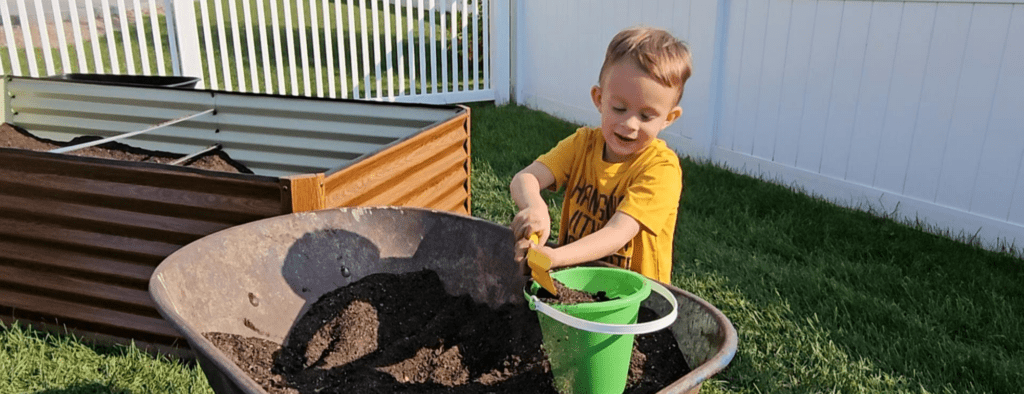
Grab a handful. Squeeze it.
- If it forms a tight, sticky ball that stays clumped, you’ve likely got clay-heavy soil.
- If it falls apart instantly and feels gritty, you may have sandy soil.
- If it’s dark, crumbly, and smells earthy — you’re in good shape.
Most Chicagoland soils lean toward clay. Clay isn’t bad — it just needs help with drainage and structure.
That’s where conditioning comes in.
Step 2: Our “Mix and Till” Products – To Improve and Loosen It Up
If your garden is in-the-ground and you have a sufficient amount existing dirt, this is the time to turn and loosen the soil. We recommend working in one of our Mix & Till soil blends to improve texture and structure. Most are a 50/50 blend of sand and compost.
Why?
Because soil compacts over winter. Roots struggle in tight soil. Water either sits too long or runs off.
When you mix and till in quality blended soil, you:
- Improve drainage
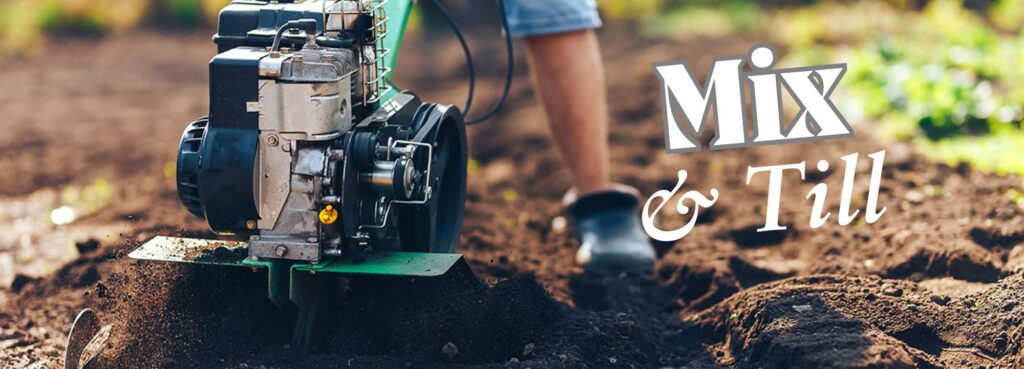
![Our Mix & Till Products Improve Existing Garden Soil]()
- Increase root penetration
- Boost microbial activity
- Create better air movement underground
Think of it as fluffing a pillow before you lay your head down. Plants like a comfortable bed too.
Step 3: Replace What Last Year’s Plants Used Up – Add Compost
This might be the most important step of all.
Your tomatoes, peppers, squash — they were hungry last year. They pulled nutrients out of that soil. If you don’t replenish them, you’ll see it in weaker growth and smaller harvests.
Adding compost naturally restores:
- Organic matter
- Microbial life
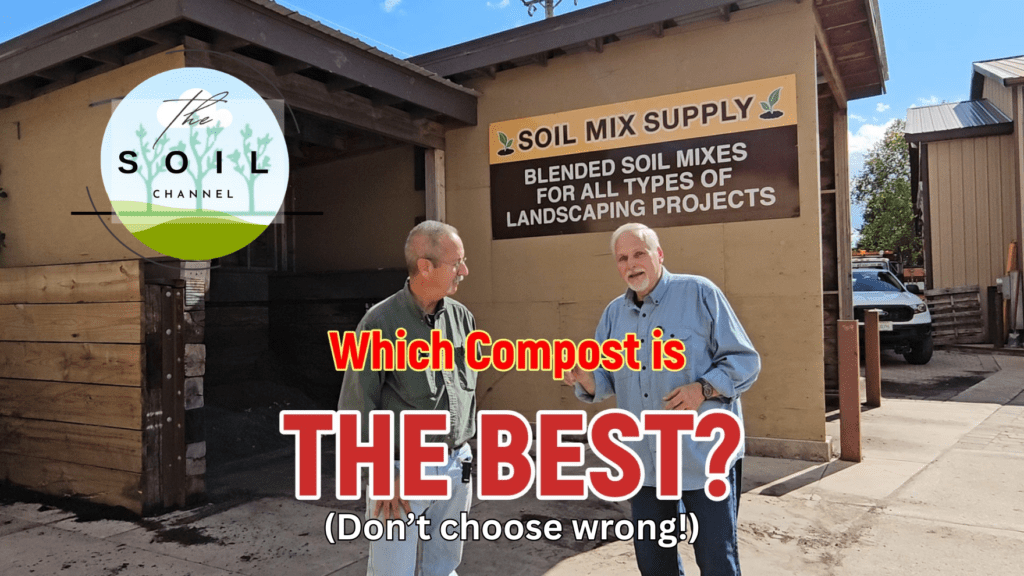
![Which Compost is THE BEST?]()
Click on the above picture to watch our Soil Channel YouTube video comparing the 5 types of compost. - Slow-release nutrients
- Soil structure
At Tim Wallace Soil Mix Supply, we carry several compost options:
- Composted Horse Manure
- Mushroom Soil Compost
- Organic Compost
- Purple Cow Compost
- Peat (more on that below)
Each has its strengths. But the key isn’t which one you choose — it’s that you add it.
Work a few inches into the top 6–8 inches of soil. That’s where most vegetable roots live and feed.
Your soil needs to eat before your plants do. Click on the above photo to watch our Soil Channel video comparing these 5 types of compost – and see which one in “The Best”.
Step 4: Consider Sand — If You Truly Need It
Now let’s talk about sand. This one gets misunderstood a lot.
If your in-ground garden soil is heavy clay and drains poorly, adding fine sand can help improve structure — but only when blended properly with compost and soil.
Never add sand alone to clay. That can make things worse, almost like concrete.
For raised beds, if drainage is sluggish or the soil feels overly dense, adding coarse sand can improve airflow and water movement. Raised beds should drain well — they’re meant to be loose and workable.
If you’re unsure whether you need sand, ask. Not every garden does.
Step 5: Don’t Forget Peat — The Overlooked Soil Conditioner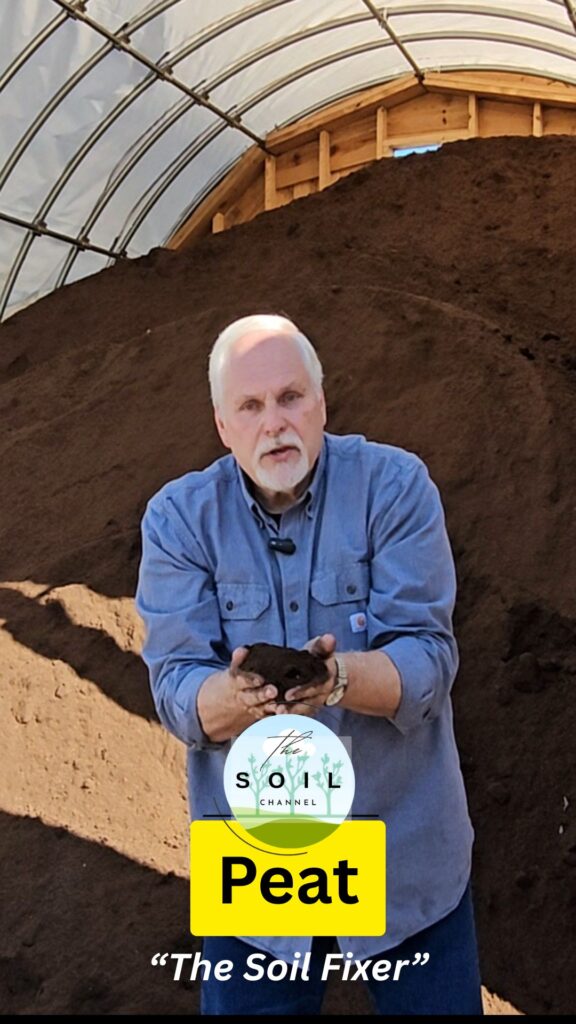
Peat doesn’t always get the attention compost does, but it should.
Peat helps:
- > Improve moisture retention
- > Balances soil structure and lower soil pH
- > Support consistent root development
- > Lighten heavy soils
- > In sandy soil, peat helps hold water.
> In clay soil, it improves workability.
It’s not fertilizer — it’s a conditioner. And in many gardens, especially older beds that have been worked year after year, peat can make a noticeable difference. Sometimes the simplest additions are the most powerful. Just don’t over-do-it! A little peat goes a long way.
Step 6: Work It In, Level, Rake, and Let It Settle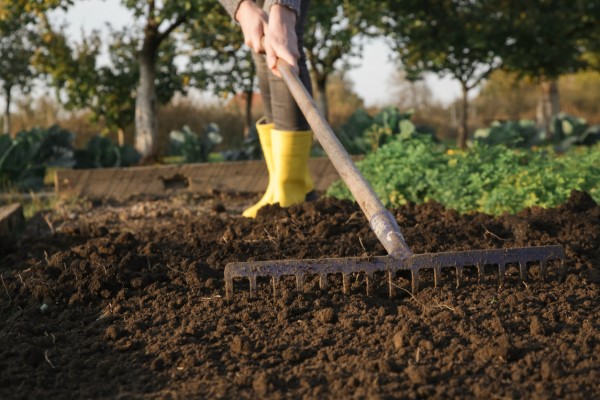
Once everything is blended and tilled:
- Rake the surface smooth
- Break up large clumps
- Water lightly to help the soil settle
- Let it rest a few days before planting
Soil needs a moment to breathe after being worked. Give it that time.

Final Thoughts from Tim and Joe
Good gardens aren’t built with shortcuts.
They’re built with:
- Quality soil
- Proper blending
- Fresh organic matter
- Thoughtful preparation. You can buy the best seeds or plants in town, but if the soil underneath isn’t ready, they’ll never reach their potential.
If you’re unsure what your garden needs this season, stop by or give us a call. After 40 years of helping Chicagoland gardeners, we’ve seen just about every soil situation you can imagine.
And we’re always happy to talk dirt.
Here’s to healthy soil and a strong growing season ahead.