After a long, dreary northern Illinois winter, most homeowners are itching to get back into their yards. While spring may feel like the natural time to fix or renovate the lawn, fall is actually the best time. From late August through mid-September, cooler temperatures, warm soil, and increased rainfall provide ideal conditions for new grass seed to thrive.
Why Fall Is the Best Time for Lawn Renovation
- Summer heat and drought have passed

![Fall is the best time to overseed and repair your lawn]()
- Weed competition is lower
- Soil is still warm for fast seed germination
- Cooler air reduces plant stress
- More consistent rainfall supports new growth
Step 1: Evaluate Lawn Conditions
Start with a visual and physical assessment of your lawn:
– Are there brown patches or thin areas?
– Does water seem to run off without soaking in?
– Are there signs of fungus, grubs, or excessive weeds?
– Have trees grown and changed the sun/shade mix in your yard?
A healthy lawn starts with knowing what you’re working with.
Consider Soil Testing
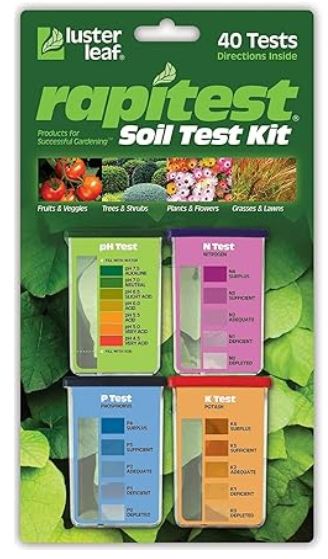 For best results, conduct a soil test before seeding or applying amendments. This helps determine pH levels and whether your lawn needs lime, sulfur, or fertilizer.
Step 2: Check for Thatch
 Thatch is a layer of dead grass between green blades and soil. A thatch layer thicker than 3/4 inch blocks water and nutrients from reaching the roots.
How to check: Remove a 2-inch wedge of soil and measure the spongy brown layer beneath the grass.
Avoid using a power rake, especially on bluegrass lawns. Instead, choose core aeration to break up thatch gently and safely.
Step 3: Address Lawn Problems First
 If you notice these issues, treat them before overseeding: – Fungus (rusty or spotted grass) – Grubs or insect damage – Dense weed coverage
Apply treatments 2–3 weeks before seeding, especially if using a non-selective herbicide like glyphosate.
Watch this guide from our friend George at Princess Cut Lawn Care for detailed weed control instructions.
Step 4: Choose the Right Grass Seed
Use a seed blend suited to your yard’s sunlight conditions:
– Full sun: Premium bluegrass blends
– Part sun/shade: Sun/shade mix
– Dense shade: Fine fescue or a shade-specific blend
Avoid: – Annual rye – Zoysia – Buffalo grass – Rough blue – Bunch-type tall fescue (unless labeled fine fescue)
Ask our staff at Tim Wallace Soil Mix Supply for the best non-coated, locally appropriate seed blend.
Step 5: Mow and Core Aerate
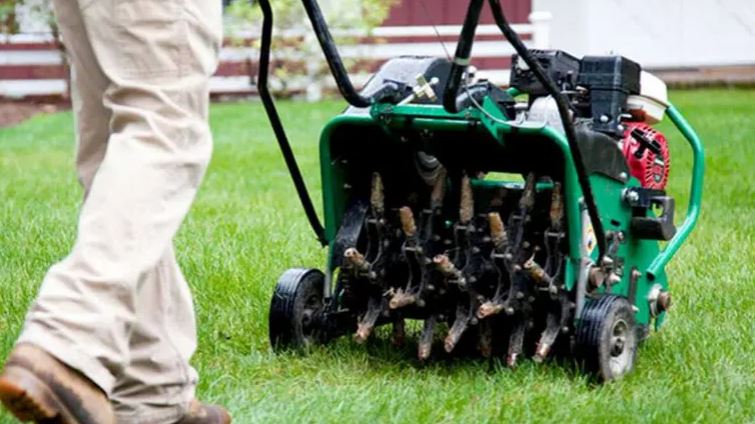 Mow your lawn to a height of 1.5 to 2 inches before aeration. This prevents clogging and helps seed reach the soil.
Core aeration pulls soil plugs 2–3 inches long and restores vital pathways for air, water, and nutrients. Rent a core aerator from your local equipment rental center.
Pro Tip: Aerate when soil is moist—not overly dry or soggy.
Step 6: Overseed After Aeration
Immediately after aerating, broadcast your selected grass seed evenly across the lawn.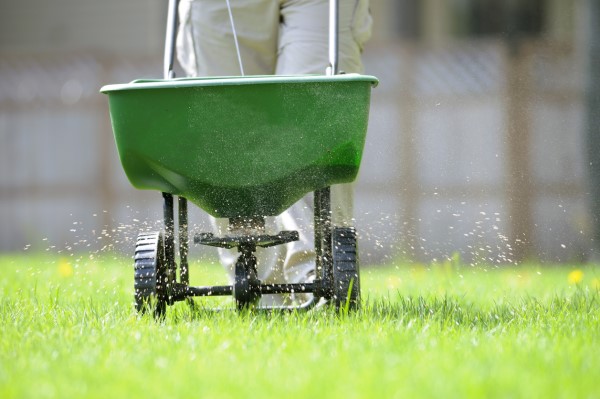
Seeding rates: – Healthy lawn: 2–4 lbs per 1,000 sq ft – Sparse or patchy lawn: 4–8 lbs per 1,000 sq ft
Use a broadcast or drop spreader and calibrate it for proper coverage.
Step 7: Topdress the Lawn
Topdressing creates a seed-friendly surface, adds organic matter, and improves moisture retention.

![Topdressing a lawn]() Two Best Topdressing Options:
Two Best Topdressing Options:
- 50/50 Mix (Topsoil + Sand): – Improves drainage and surface leveling – Easy to spread
- Lawn Repair Mix (Topsoil + Fine Sand + Purple Cow Compost): – Rich in nutrients – Enhances root growth and seed germination
Apply a thin layer (no more than 1/2”) using one of two methods:
– Shovel and broadcast evenly
– Dump mounds and rake out with a landscape rake or push broom
Be sure grass tips remain visible—don’t bury the lawn.
How much topdressing do I need? Use 1.5 cubic yards per 1,000 square feet for a 1/2” layer.
Step 8: Water New Seed Properly
 Water lightly and frequently until germination. – Days 1–14: Mist once or twice daily to keep seed moist – Days 14–28: Water deeply once or twice per week
Germination times: – Rye/Fine Fescue: 5–7 days – Bluegrass: 10–14 days
Wait until the grass is 3” tall before mowing. Mow no more than 1/3 of the grass height.
Avoid applying most herbicides until the new lawn has been mowed 2–3 times.
Pro Tip: Tenacity Herbicide, produced by Syngenta, is a selective, systemic herbicide used for both pre-emergent and post-emergent control of various broadleaf and grassy weeds in turfgrasses. Its active ingredient is mesotrione. It controls over 46 types of broadleaf and grassy weeds, including crabgrass, dandelion, ground ivy, yellow foxtail, yellow nutsedge, and creeping bentgrass. Tenacity can be used on both new and established turfgrass, including Kentucky bluegrass, perennial ryegrass, tall fescue, fine fescue, centipedegrass, and buffalograss. It can be applied at the time of seeding to prevent weed germination and allow new grass to establish without competition.
Fall Lawn Renovation Checklist
- Soil test completed

![Fall Renovations Checklist]()
- Lawn mowed to 1.5”
- Core aeration performed
- Appropriate grass seed selected
- Seed broadcasted evenly
- Topdressing applied
- Watered daily for 2 weeks
- Mowed after reaching 3” height
Common Mistakes to Avoid
- Using the wrong seed for your lawn’s sun/shade conditions

![Avoid these common mistakes]()
- Overseeding without aeration or topdressing
- Watering too little or letting seed dry out
- Applying herbicides too soon
- Rototilling the lawn (rarely necessary)
- Starting too late in the season
FAQs
 Can I overseed in October? Yes, but earlier is better. Seeds need time to germinate and mature before frost.
What if I have pets? Keep pets off newly seeded areas for 2–3 weeks.
Can I use straw over seed? Yes, but use weed-free straw lightly. It helps retain moisture.
Do I need to do this every year? No. With proper care, a renovated lawn can thrive for years.
Talk to the Lawn Experts
By following these steps, you’ll be rewarded with a thicker, greener, healthier lawn next spring.
Stop by Tim Wallace Soil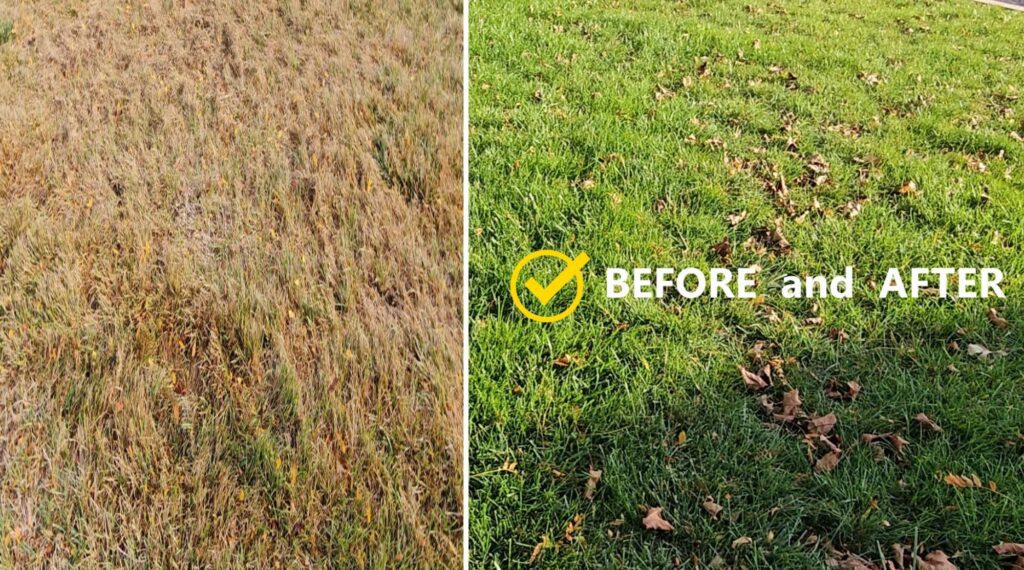 Mix Supply or call today. Our team is ready to help with expert advice, premium seed blends, and silky-smooth topdressing mixes. (630) 759-1080
Fall renovation season is short—start today!