As the leaves turn and temperatures drop, many homeowners wonder: how late is too late to fertilize the lawn in the fall? The answer depends on your grass type, local climate, and the specific needs of your soil. Fall is one of the most important times of year for lawn care, and fertilizing correctly sets the stage for a lush, healthy lawn next spring.
Why Fall Fertilizing Matters
![Fall is a great time to fertilize your lawn]()
Grass doesn’t stop growing just because the weather cools. While top growth slows down, the roots are still actively storing nutrients. A fall feeding helps:
- Strengthen root systems before winter dormancy
- Repair summer stress damage
- Build nutrient reserves for early spring green-up
Skipping this crucial step often leads to weaker lawns, slower spring recovery, and more susceptibility to weeds.
The Ideal Timing for Fall Fertilizer
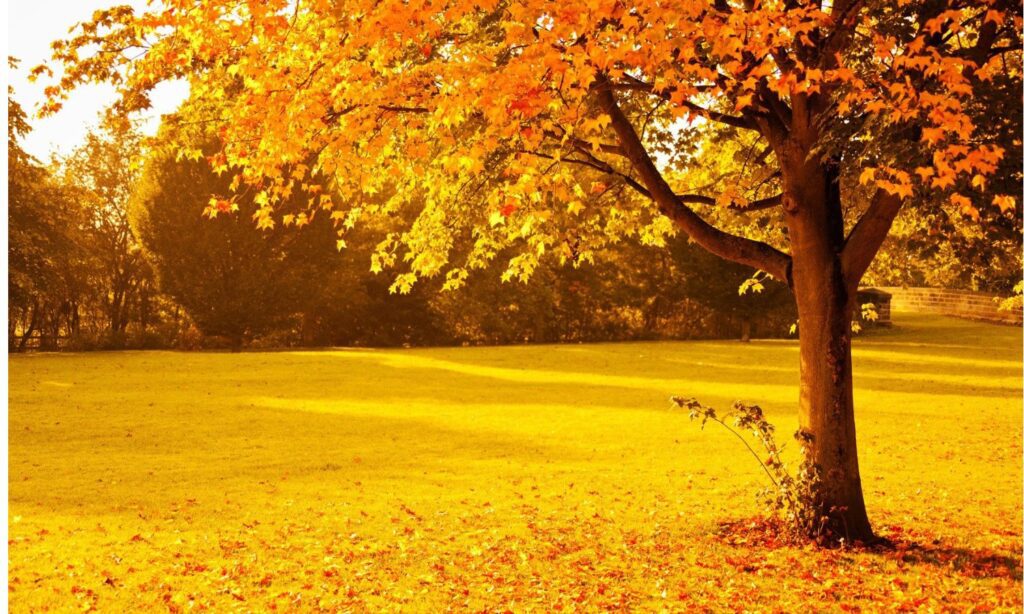
The general rule of thumb: fertilize your lawn 2–3 weeks before the ground freezes. For most regions, this means sometime between late September and early November. However, timing varies:
- Cool-season grasses (Kentucky bluegrass, fescue, ryegrass): Fertilize in late September through early November.
- Warm-season grasses (Bermuda, zoysia, St. Augustine): Their main feeding is in summer, but in warmer regions a light early fall application may still help.
Signs You’re Still on Time

- Soil is not frozen yet
- Daytime temps are consistently above 50°F
- Grass is still showing some growth (you’re mowing at least once every 10–14 days)
If your lawn has already gone dormant and the ground is hard or frozen, it’s best to wait until spring.
What Fertilizer Should You Use?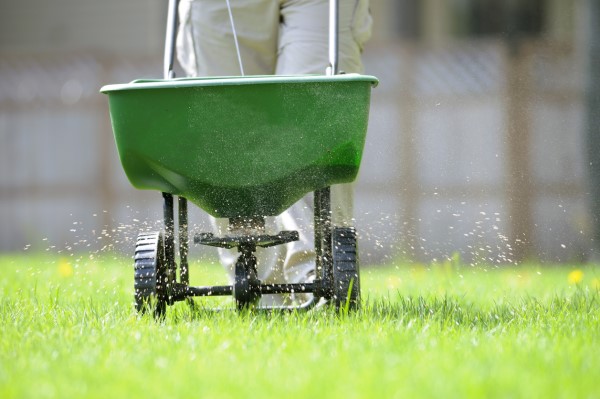
![For fall, choose a slow-release, nitrogen-rich fertilizer with added potassium.]()
For fall, choose a slow-release, nitrogen-rich fertilizer with added potassium. Nitrogen fuels root growth and blade recovery, while potassium strengthens the lawn against cold and disease. Avoid heavy spring-style fertilizers that push top growth—you want roots, not shoots, this time of year.
Extra Tips for Late Fall Lawn Fertilizing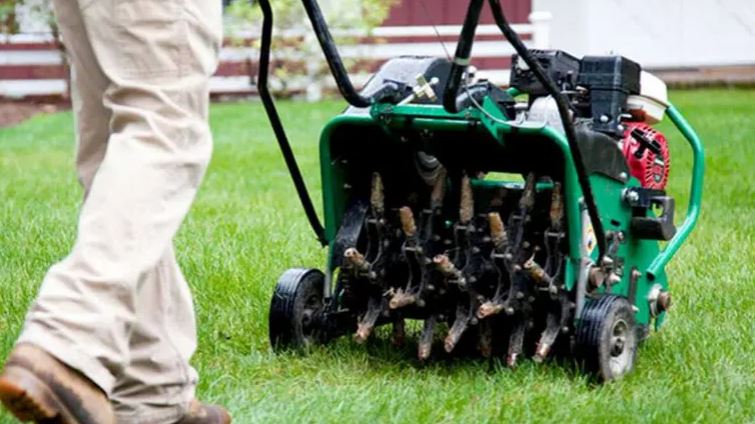
![core aerate lawn]()
- Pair with aeration: Aerating before fertilizing allows nutrients to reach the root zone more effectively.
- Water lightly after applying: Moisture helps activate the fertilizer and prevents burning.
- Don’t overdo it: Too much nitrogen late in the season can stress the grass or cause runoff.
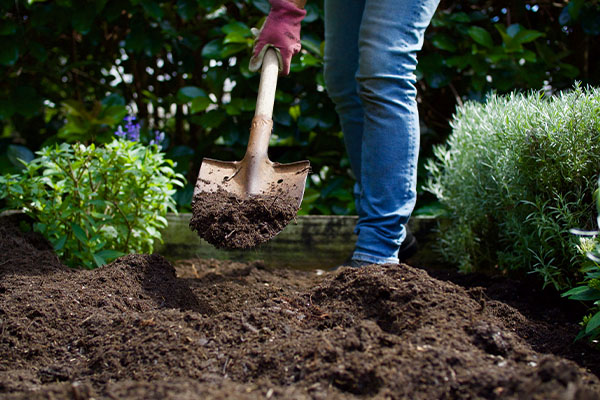
![Shoveling soil and compost in garden]() Compost as Fertilizer
Compost as Fertilizer
When most homeowners think about fall lawn care, they picture bags of fertilizer and a push spreader. While synthetic fertilizers can give you that quick green-up, there’s a more natural—and often more effective—solution for long-term lawn health: compost.
Adding compost to your lawn in the fall, often called fall lawn composting or topdressing, is one of the best-kept secrets of professional turf managers. Instead of just feeding the grass blades, compost enriches the soil beneath, creating the foundation for a healthier, greener, and more resilient lawn.
Why Compost in the Fall?
![Fall is the ideal season for compost applications]()
Fall is the ideal season for compost applications because your grass is busy below the surface. While top growth slows, turf roots are expanding, storing energy, and preparing for winter dormancy. Compost supports this natural cycle by:
- Providing nutrients naturally: Compost contains nitrogen, phosphorus, potassium, and essential trace elements—all in a slow-release form that won’t burn your lawn.
- Improving soil structure: When combined with core aeration, compost settles into those aeration holes, loosens compacted soil, and improves drainage.
- Boosting soil biology: Compost is teeming with beneficial microbes that break down organic matter and unlock nutrients, fueling strong root development.
- Building resilience: A lawn treated with compost bounces back from stress faster and greens up earlier in spring.
How to Apply Compost to Your Lawn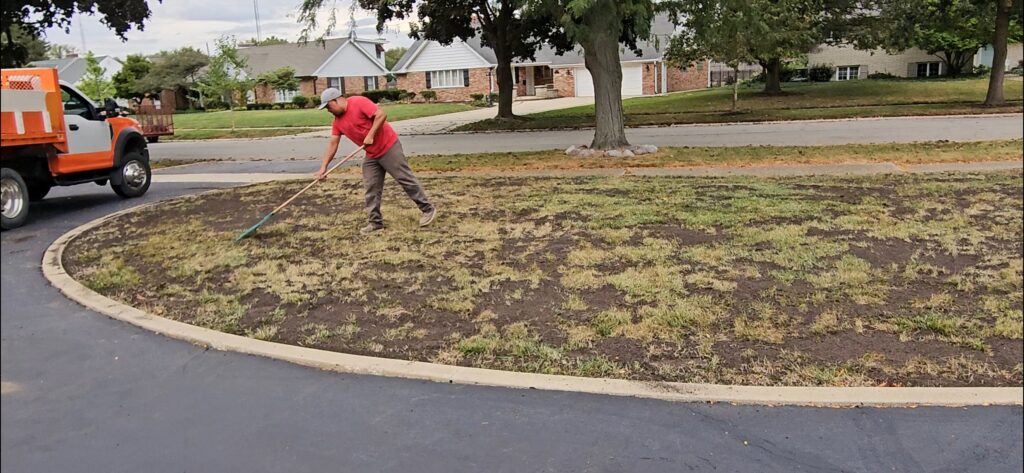
![Spread a thin layer—about ¼ to ½ inch—across the entire lawn.]()
The process is simple, but timing and technique matter:
- Best Time: Apply compost in early to mid-fall (typically September through October).
- Application Rate: Spread a thin layer—about ¼ to ½ inch—across the entire lawn. Too much can smother grass.
- Topdressing Method: Use a broadcast spreader, wheelbarrow and rake, or professional topdressing service for an even finish.
- Water In: A light watering helps compost settle into the soil and blend with existing turf.

![Synthetic fertilizers have their place—they provide a quick nutrient boost, especially nitrogen.]() Compost vs. Traditional Fertilizers
Compost vs. Traditional Fertilizers
Synthetic fertilizers have their place—they provide a quick nutrient boost, especially nitrogen. But they don’t improve soil structure or microbial activity. Compost, on the other hand, builds long-term soil health.
For many homeowners, the best strategy is a hybrid approach: use compost as your primary soil amendment and a light application of fall fertilizer for an extra push before winter.
The Bottom Line
![soil for lawn]()
If you’re looking for fall fertilizer alternatives that don’t just green up your lawn but actually improve the soil beneath it, compost is the answer. A single application in the fall can transform your soil’s structure, improve drainage, and set your lawn up for success come spring.
The latest you can fertilize your lawn in the fall is right up until the soil begins to freeze. For most homeowners, that sweet spot is mid-to-late fall—October is prime time in northern climates, while warmer regions may stretch into November.
Done correctly, fall fertilization is like giving your lawn a hearty meal before a long winter’s nap—setting it up to wake up green, thick, and healthy in the spring.
At Tim Wallace Soil Mix Supply, we provide high-quality compost blends ideal for fall lawn repair and topdressing. Stop by and let us help you give your lawn the natural advantage it deserves this fall.