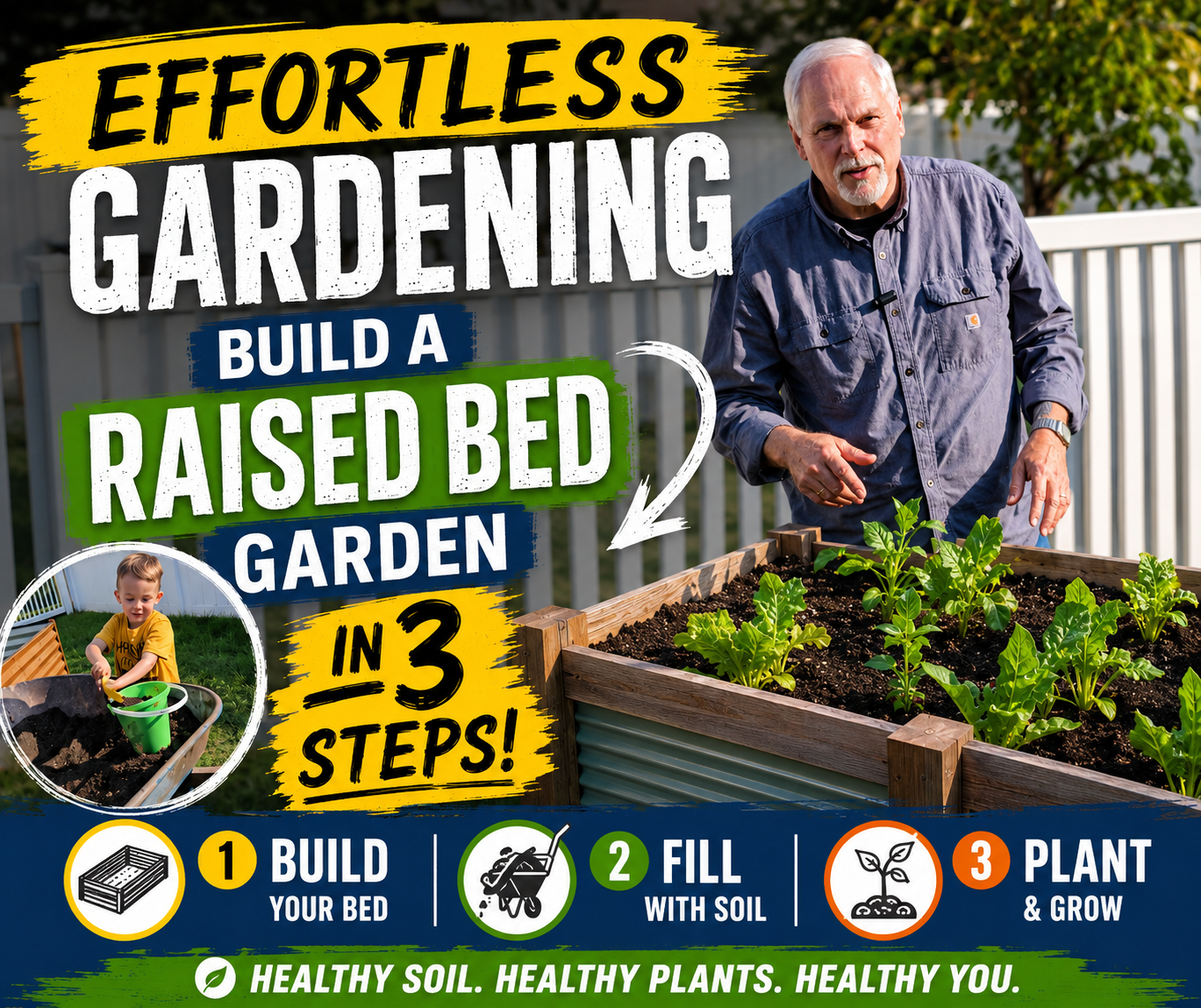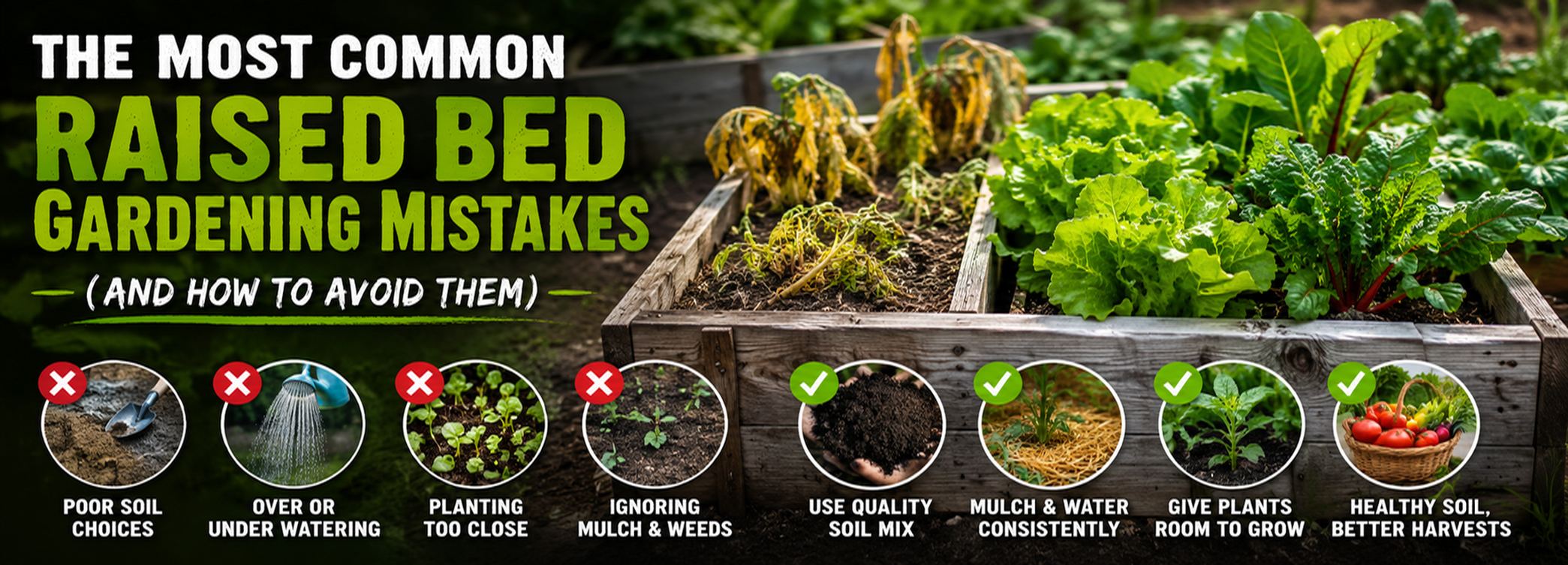
Raised bed gardening has become one of the most popular ways to grow vegetables, herbs, and flowers at home. Raised beds offer better drainage, improved soil quality, fewer weeds, and easier maintenance than traditional in-ground gardens. They also can allow gardeners with physical limitations related to bending or kneeling continue to do gardening with less difficulty. However, simply building a raised bed doesn’t guarantee success.
Every year, we hear from gardeners who are frustrated by poor plant growth, low yields, nutrient deficiencies, or watering issues—only to discover that one or two common raised bed mistakes are holding their garden back.
The good news? Most raised bed gardening problems are easy to prevent when you understand how healthy soil, proper bed design, and smart gardening practices work together.
Here’s a look at the most common raised bed gardening mistakes and how to avoid them.
Don’t Ignore the Pre-Plant Prep
Always start at the bottom of your bed and work upward to avoid problems later. 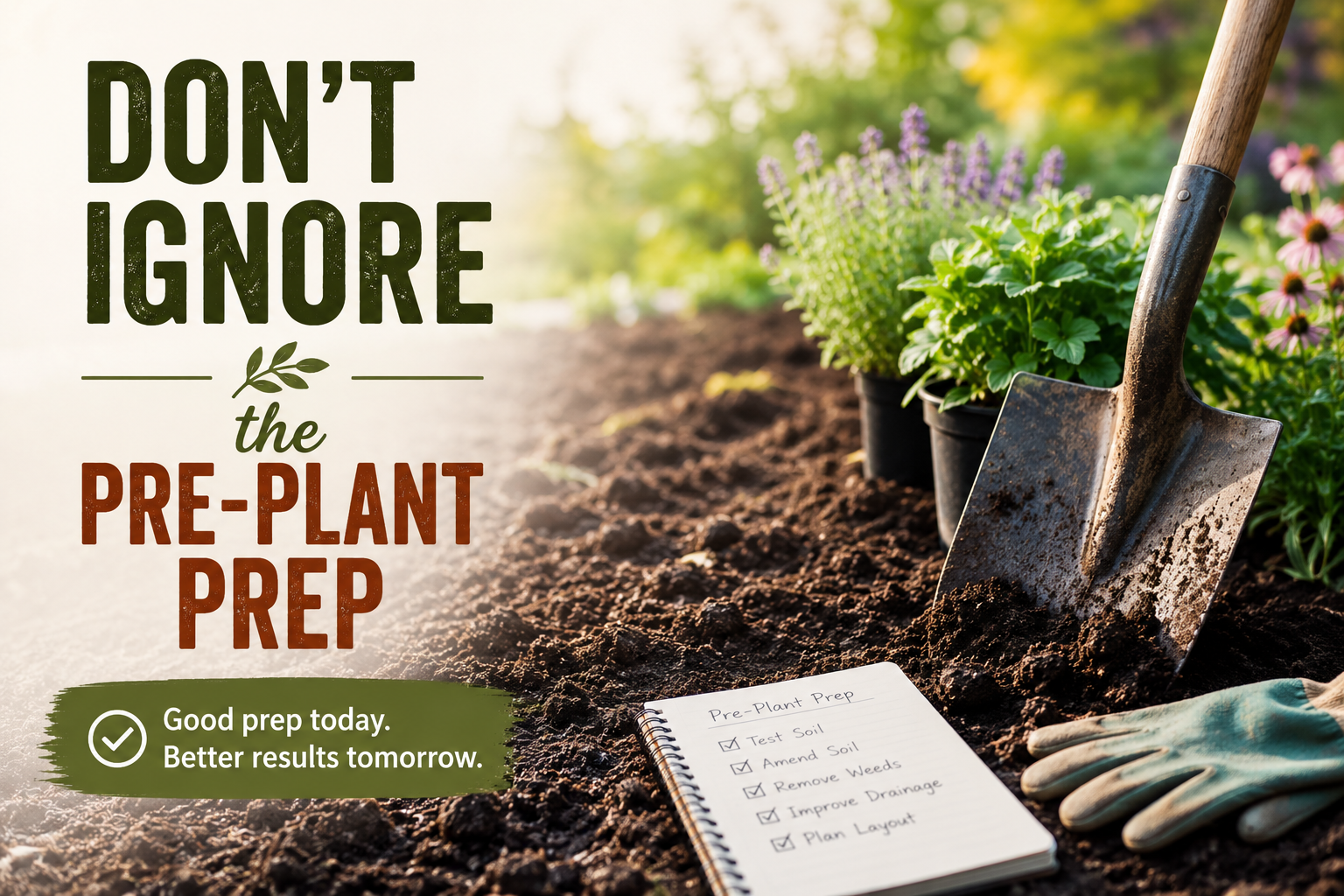
Line the bottom of your bed if you’re using a no-dig / no bottom garden bed.
- For open bottom beds, set the bed in place and be sure its level. Then add a layer of non-waxed card board that will choke out and separate the underlying grass and soil from the bed. Soak the cardboard thoroughly. Then add a layer of landscape fabric.
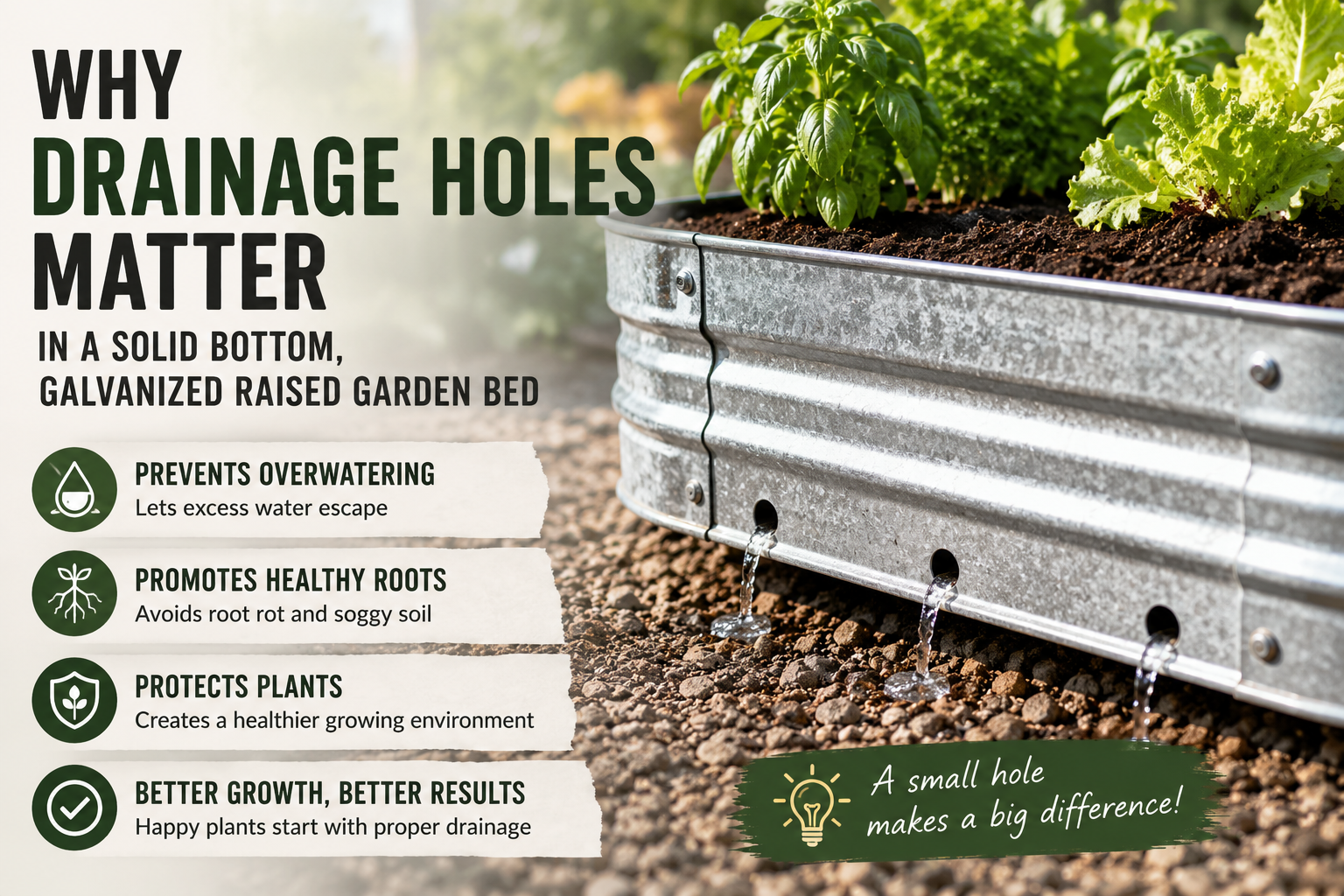
- For garden beds with a bottom (like a watering trough) be sure to drill drainage hole in the bottom of the bed before you begin to fill it.
Drilling drainage holes in the bottom of a trough-style raised bed is one of the most important steps you can take to ensure healthy plant growth. Unlike traditional raised beds that sit directly on the ground, trough-style beds have a solid bottom that can trap water if drainage is inadequate.
Why Drainage Holes Matter
- Prevent Root Rot
![Why drainage holes matter]()
Plant roots need both water and oxygen. When excess water can’t escape, the soil becomes saturated, pushing out air pockets that roots rely on for respiration. Prolonged soggy conditions can lead to root rot, a common cause of plant decline and death.
- Improve Soil Aeration
Healthy soil contains a balance of water and air. Drainage holes allow excess water to leave the bed, helping maintain proper aeration and encouraging stronger root development.
- Reduce Disease Problems
Many fungal diseases thrive in consistently wet soil conditions. Poor drainage can increase the risk of:
- Root rot
- Damping off
- Fungal wilts
- Other soil-borne diseases
Proper drainage creates a healthier environment for both plants and beneficial soil microbes.
- Prevent Nutrient Imbalances
Waterlogged soil can interfere with nutrient uptake, causing symptoms such as:
- Yellowing leaves
- Stunted growth
- Poor fruit production
Even when nutrients are present in the soil, roots may struggle to absorb them if oxygen levels are low.
- Protect the Structure of the Bed
Standing water can shorten the lifespan of wooden trough beds by accelerating rot and decay. Good drainage helps preserve the integrity of the bed and extends its useful life.
How Many Drainage Holes Should You Drill?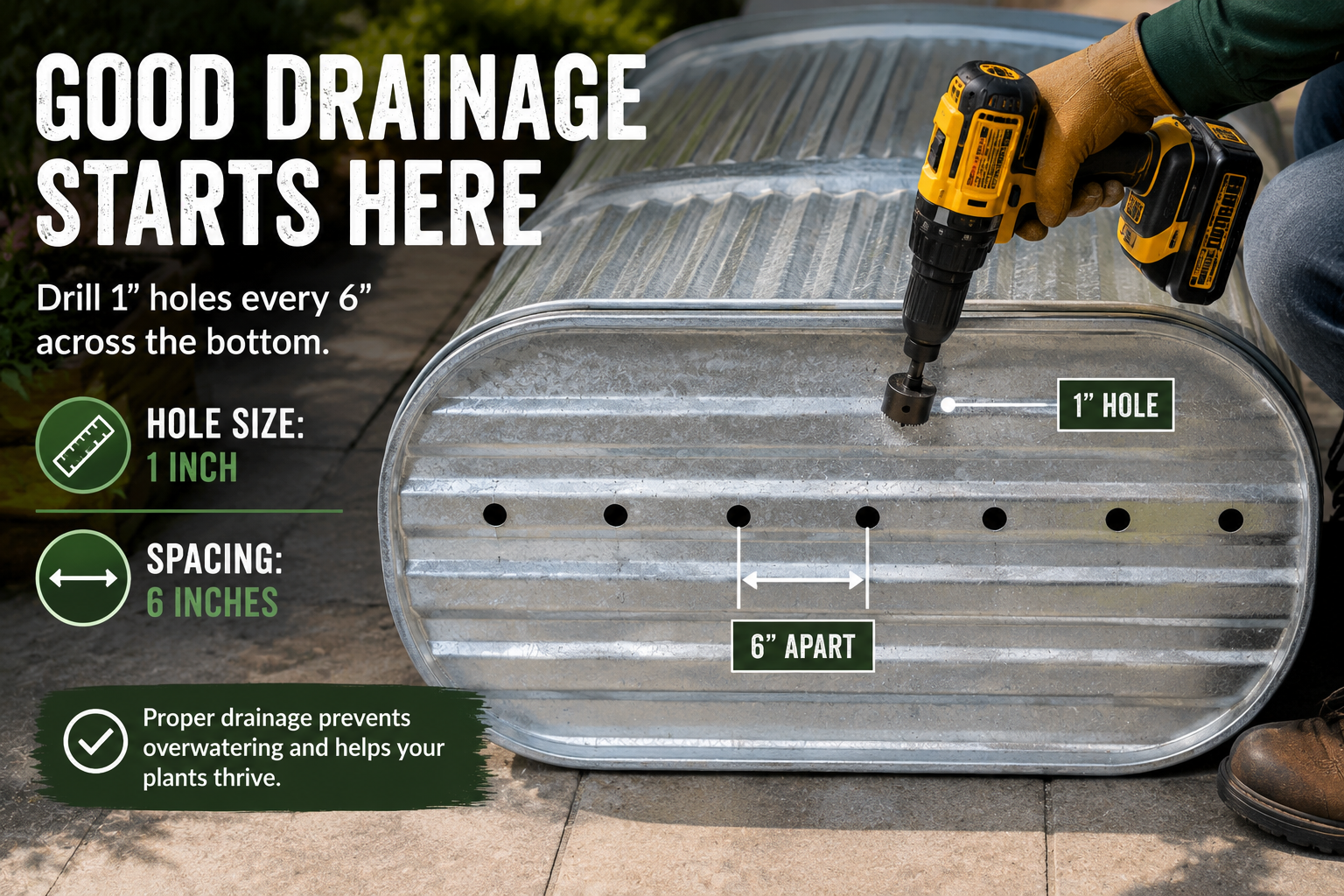
As a general guideline:
- Drill holes approximately ½ inch to 1 inch in diameter
- Space holes every 6 to 12 inches across the bottom
- Ensure water can drain evenly from all areas of the bed
The larger the trough, the more drainage holes you’ll need.
Don’t Use Gravel at the Bottom
A common misconception is that adding a layer of gravel improves drainage. In reality, research has shown that gravel can create a “perched water table” that actually keeps water higher in the soil profile.
Instead, fill the bed with a high-quality raised bed mix that provides:
- Good drainage
- Adequate moisture retention
- Proper aeration
The Bottom Line
A trough-style raised bed without drainage holes is essentially a large container. Without a way for excess water to escape, roots can quickly become stressed or damaged. By drilling adequate drainage holes before filling the bed, you’ll create healthier growing conditions, reduce disease risk, and give your vegetables, herbs, and flowers the best chance to thrive.
For best results, pair proper drainage with a premium raised bed soil mix rich in compost and organic matter to create the ideal environment for strong root growth and abundant harvests.
The Top 10 Reasons Raised Garden Bed Mistakes
- Filling Raised Beds with the Wrong Soil
One of the biggest mistakes gardeners make is assuming that any dirt will work in a raised bed.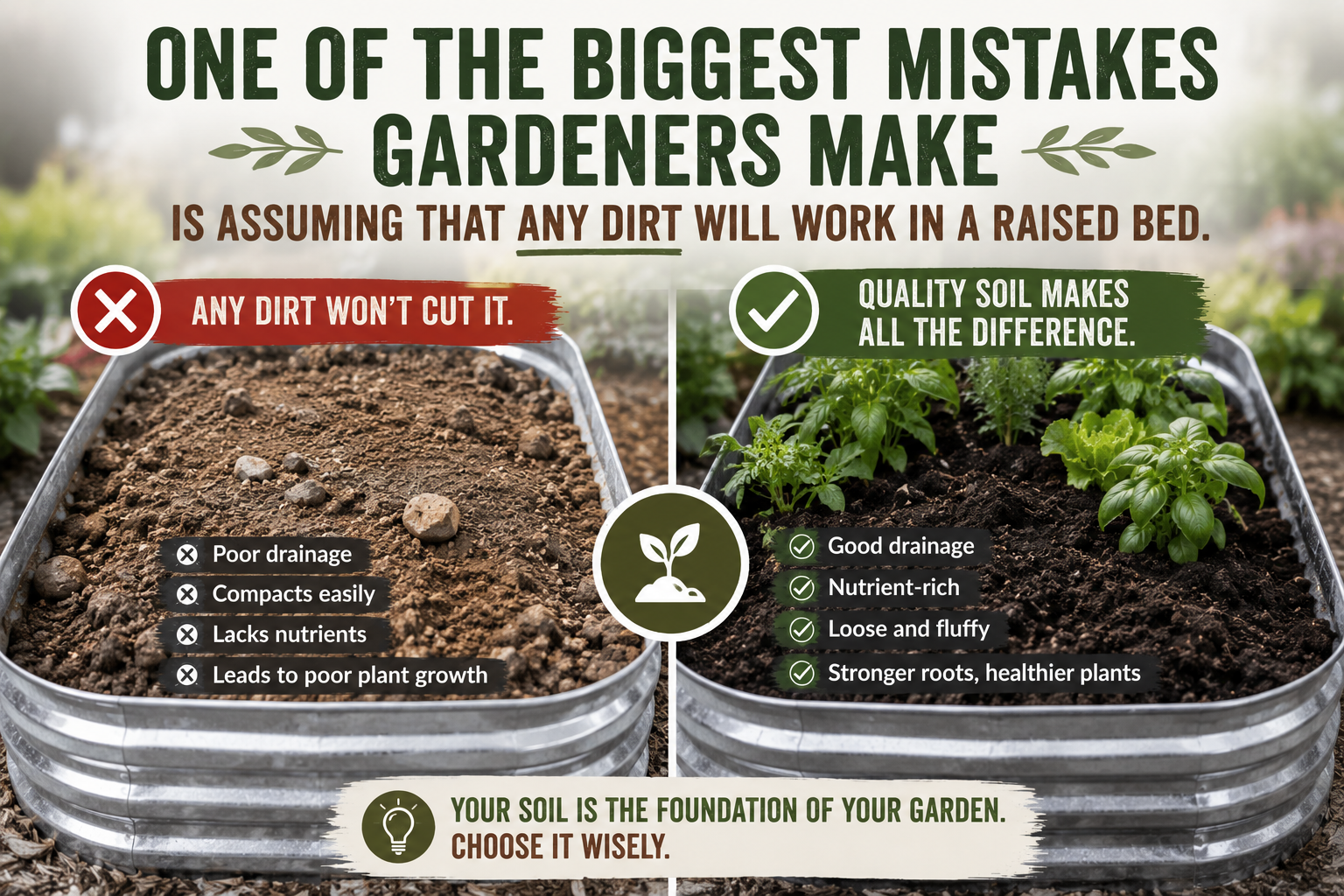
Many people fill their beds with:
- Native soil (think something you dug up from in your yard)
- Heavy clay soil
- Cheap unprocessed dirt
- Topsoil alone
- Soil excavated from construction sites
While these materials may save money upfront, they often create drainage problems, compaction issues, and poor root development. They are also nutrient deficient in almost every possible way.
The Solution
Raised beds perform best when filled with a high-quality blend designed specifically for growing plants.
An ideal raised bed soil requires these 3 critical components:
- Quality planting media (good topsoil / black dirt)
- Moisture Control (for this, coarse sand is preferred)
- Nutritional content like Organic matter (think Compost)
A quality blend like our Raised Bed Mix provides the structure, nutrients, and moisture-controlling capacity plants need to thrive throughout the growing season.
- Building Beds That Are Too Wide
Many first-time gardeners build raised beds that are difficult to reach across from side-to-side.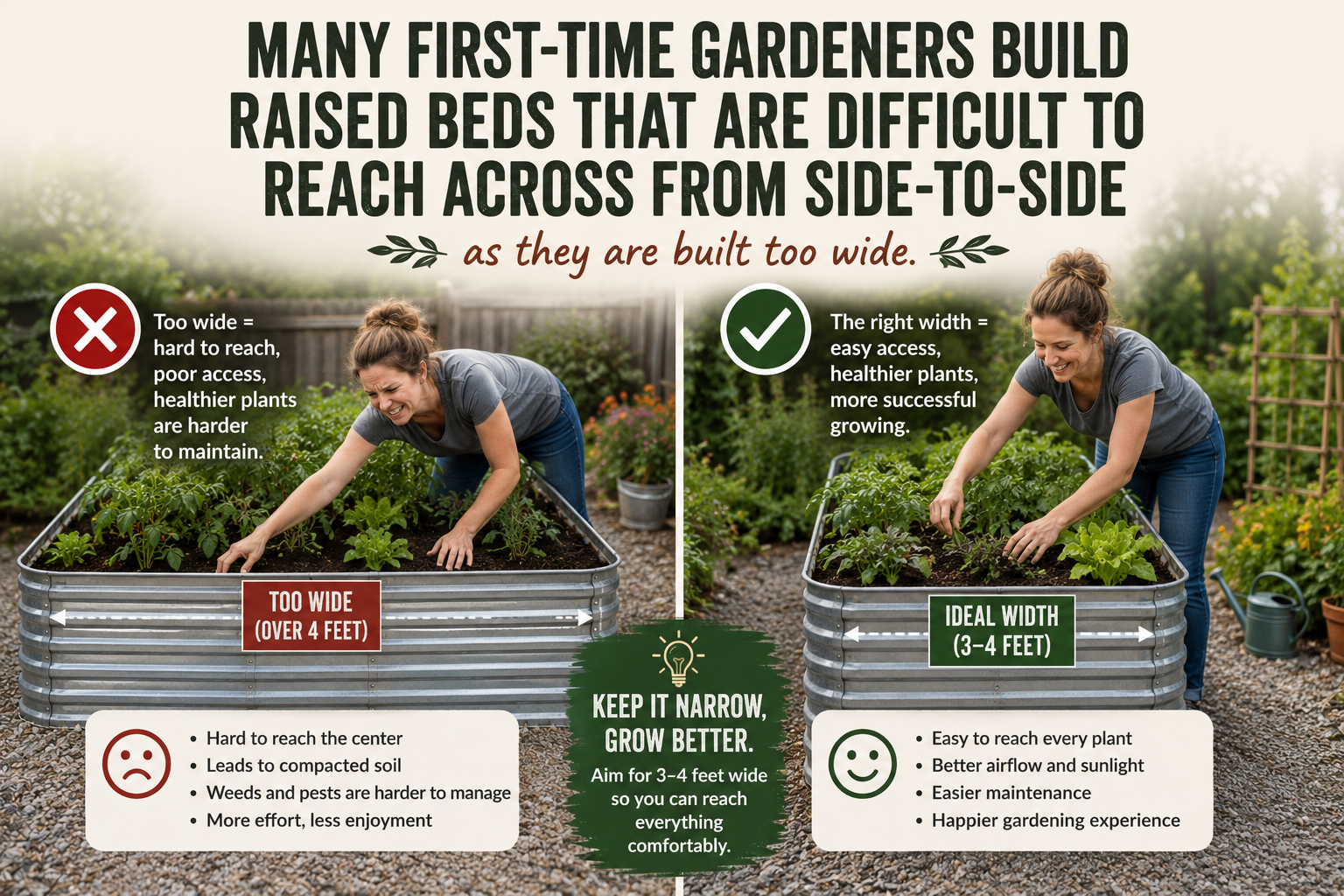
A bed that is too wide often leads to:
- Soil compaction from stepping or kneeling inside
- Difficulty harvesting crops
- Missed weeds and crop maintenance
The Solution
Keep raised beds no wider than:
- 4 feet wide when accessible from both sides
- 3 feet wide when accessible from one side only
This allows you to reach the center of the bed (for both plant and bed maintenance and weed control) without stepping into it and compacting the soil.
- Overfilling Deep Raised Beds with Expensive Garden Soil
A common misconception is that every inch of a deep raised bed must be filled with a premium garden soil.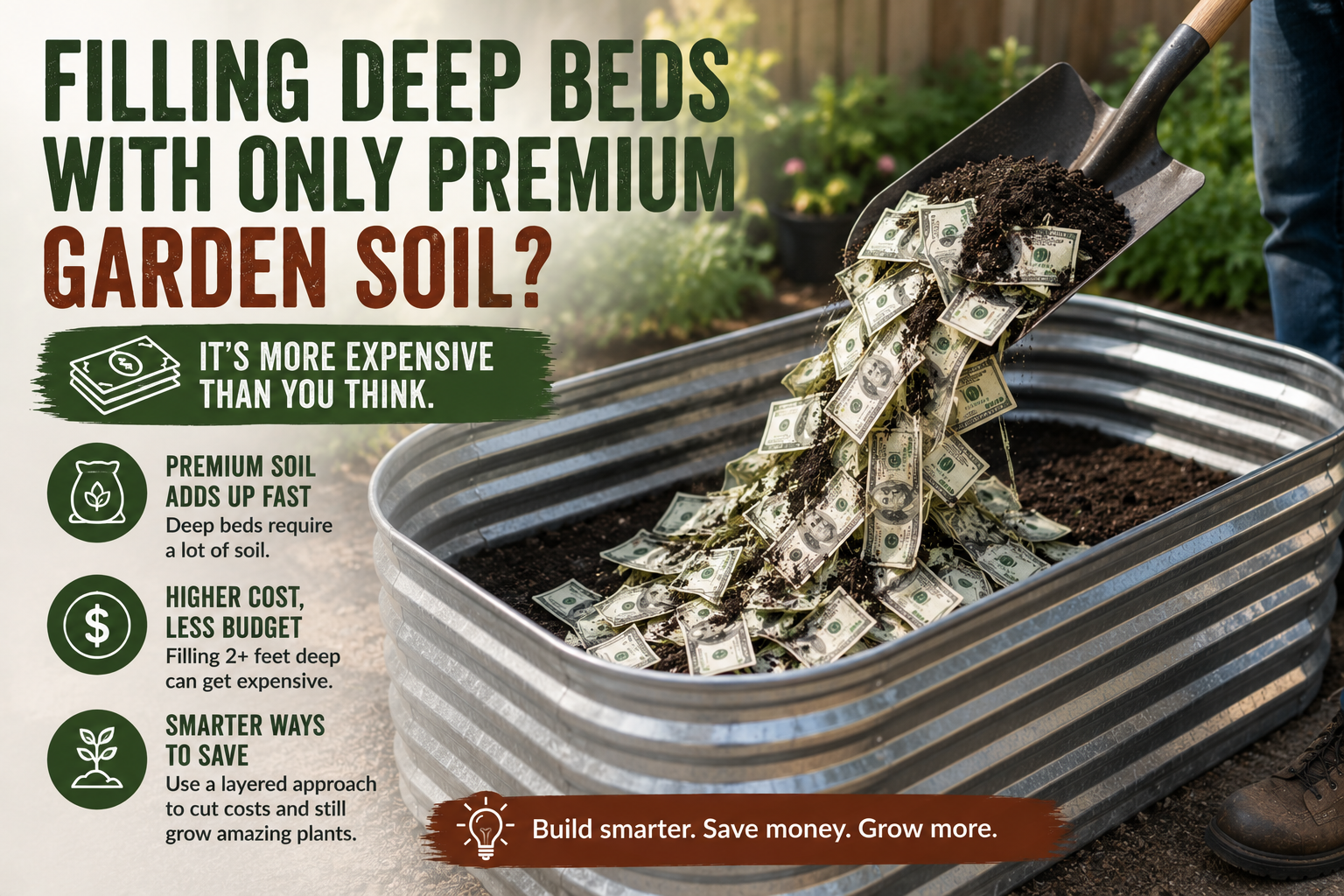
For beds that are 18 to 36 inches deep, this can become unnecessarily expensive.
The Solution
Use a layered approach.
The lower portion of deeper beds can be filled with:
- Available “organic” material you may already have like branches, logs, browned (aged) grass clippings or shredded leaves (these organic materials that will decompose over time)
- A Raised Bed Filler Mix – the best materials and ratio is a 50% topsoil and 50% aged hardwood bark nugget combo that you can purchase pre-made – or, create on your own.
Save the premium raised bed mix soil for the upper growing zone (upper 12 inches) where roots will be most active.
This approach reduces costs while still creating excellent growing conditions.
- Ignoring Soil Moisture Control
Many gardeners assume raised beds automatically solve drainage problems.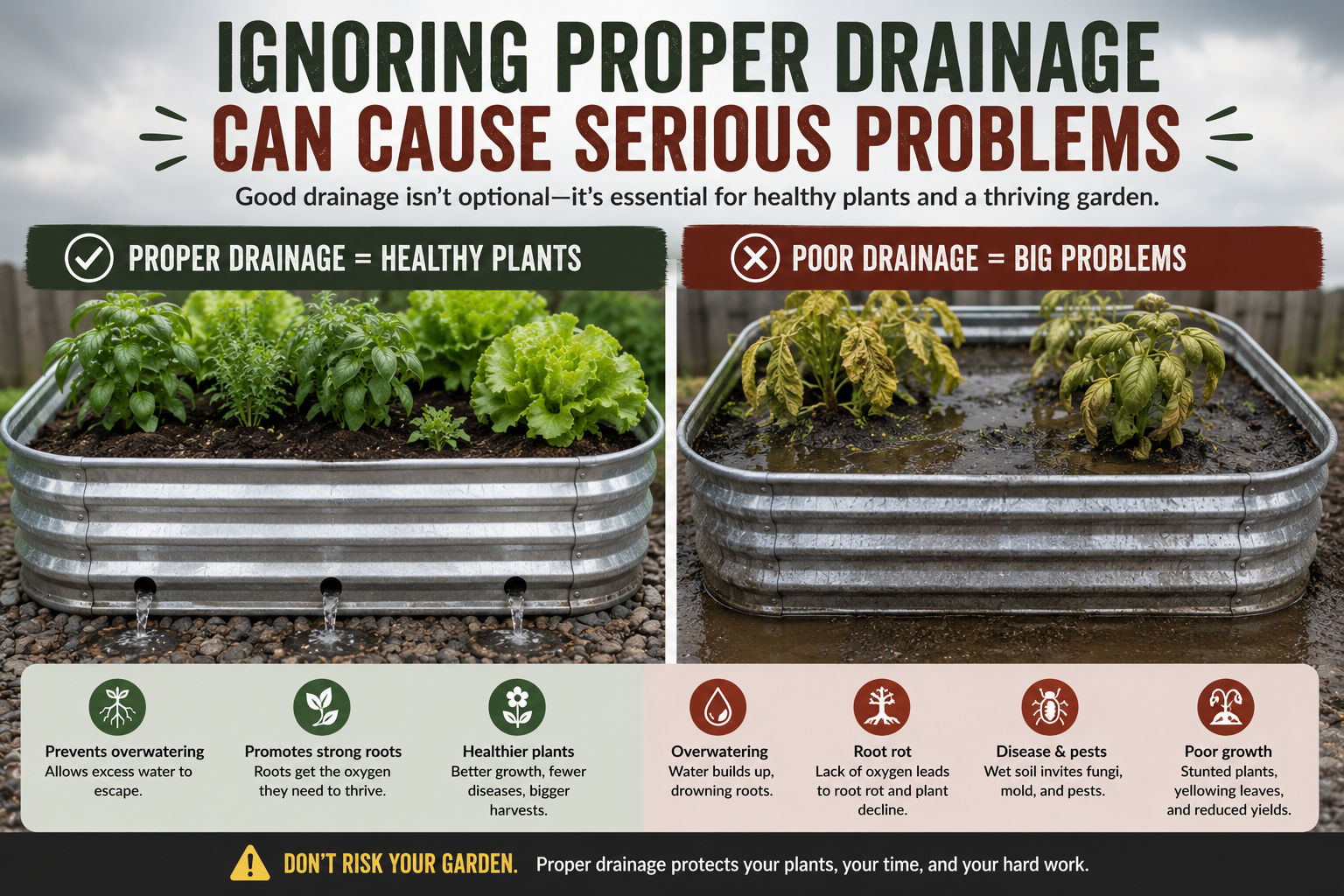
While raised beds can help improve drainage, poor soil selection or use of the wrong type of sand can still create waterlogged conditions. Sand aids greatly in moisture control and thus drainage. Additionally, sand increases workability of the soil and soil porosity (the space between the molecules of dirt that allow for improved nutrient. oxygen and water exchange.)
Signs of improper drainage include:
- Yellowing leaves
- Stunted growth
- Root rot
- Mushy soil
The Solution
Choose a soil blend that balances:
- Drainage / Water control (coarse sand in raised beds)
- Aeration via improved porosity
Incorporating compost and organic matter helps create a soil structure that allows excess water to move through while retaining enough moisture for microbial activity and healthy plant growth.
- Underestimating Water Needs
Raised beds often dry out faster than traditional gardens, especially during hot summer weather.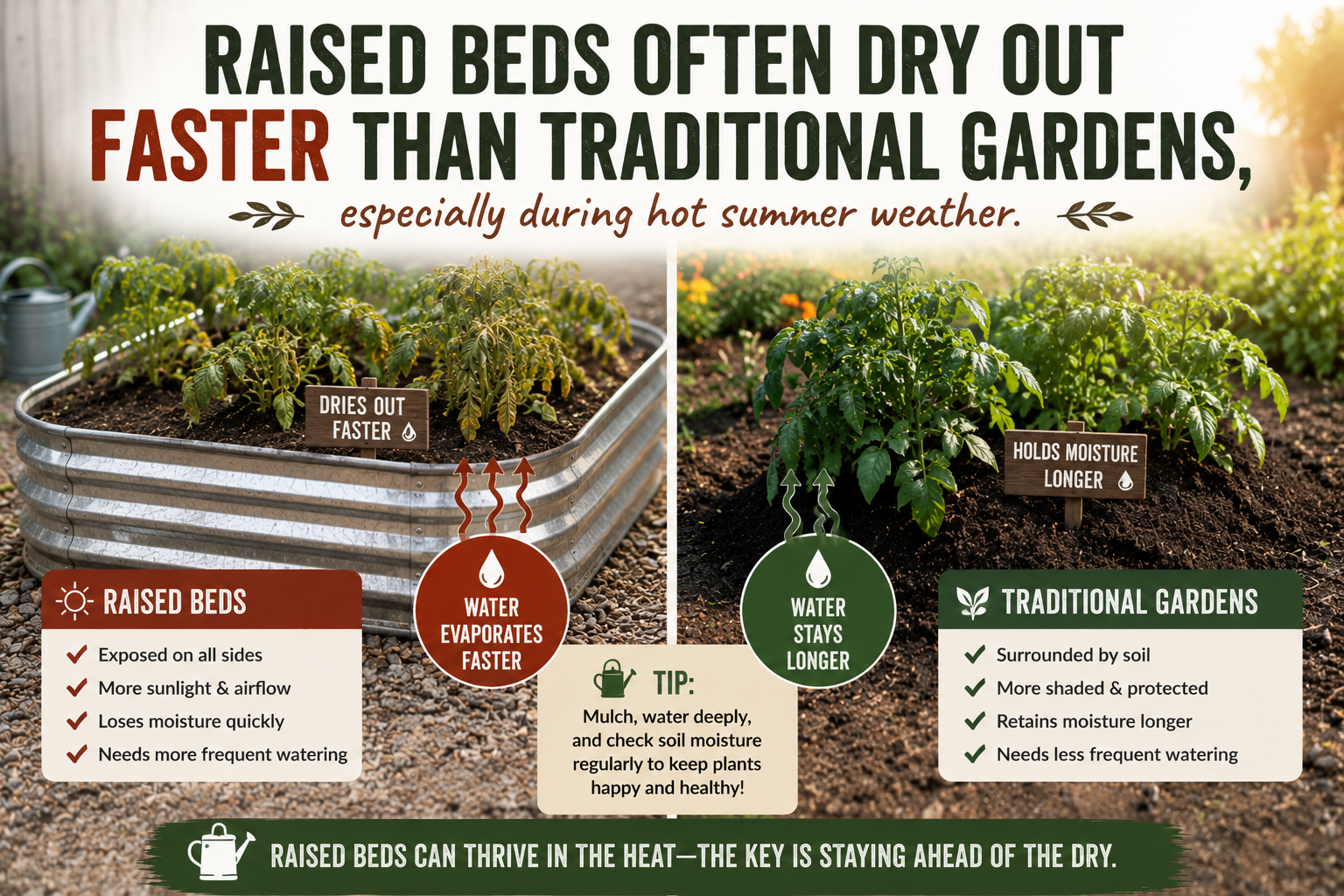
Because raised beds have more exposed surface area, they lose moisture more quickly.
The Solution
Monitor soil moisture regularly and water deeply rather than lightly.
Additional strategies include:
- Applying mulch (but keep it away from the stems of your veggie plants)
- Installing drip irrigation
- Adding compost to improve moisture retention
- Watering early in the morning
A 2-to-3-inch layer of mulch can dramatically reduce moisture loss during summer heat. (More on the best type of mulch later in this post.)
- Forgetting to Add Compost Each Year
Plants remove nutrients from the soil every growing season. Most garden vegetable plants like tomatoes and peppers are classified as “heavy feeders”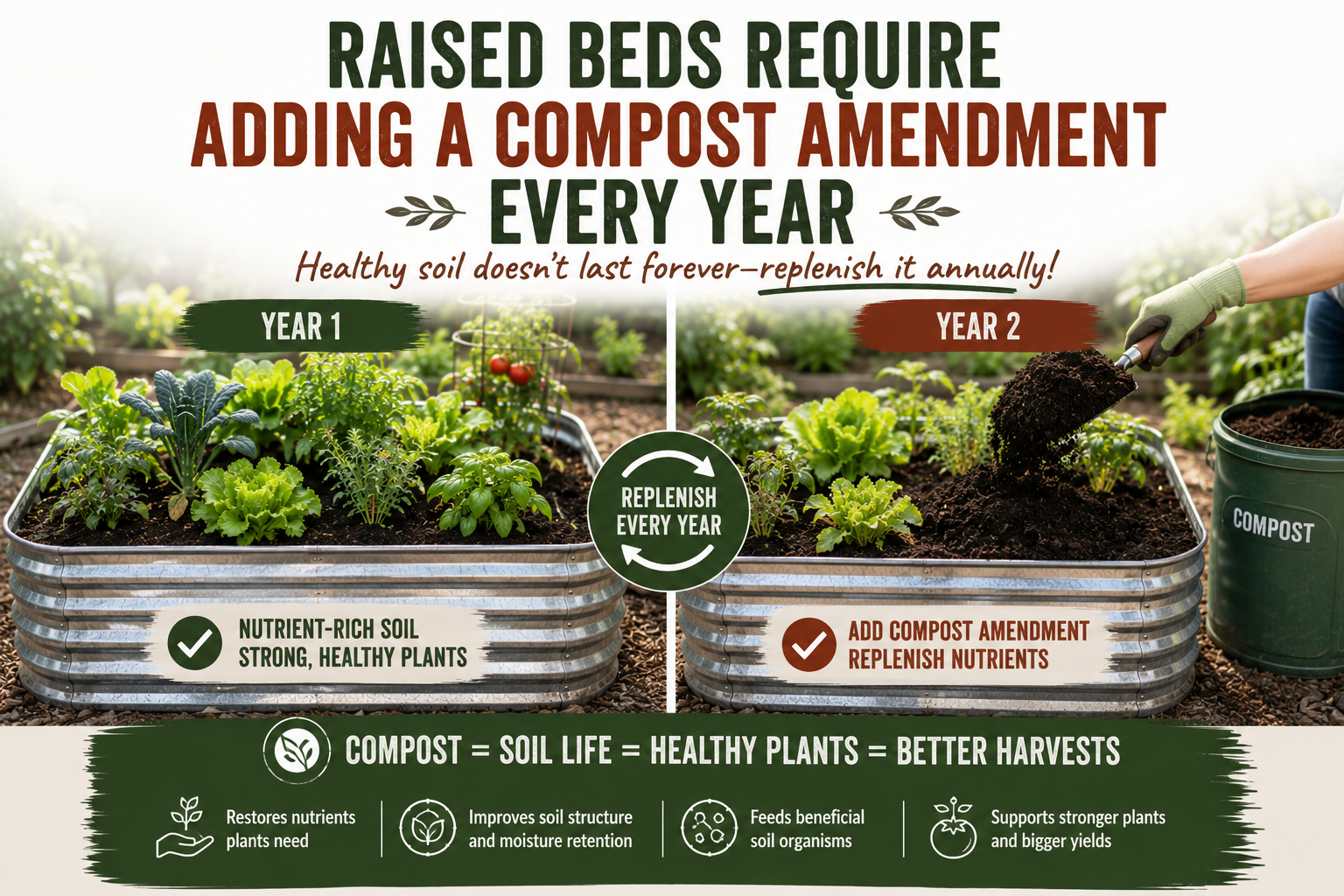 and can deplete the soil’s nutritional content in one single growing season!
Many gardeners fill a raised bed once and assume the soil will remain productive indefinitely. Not so. Unfortunately, nutrients become depleted quickly and in a short amount of time.
The Solution
Refresh raised bed soil annually by adding:
- Compost (In Spring 30 days before planting)
- Organic matter (mulched leaves and dried lawn grass in Autumn)
- Soil amendments as needed
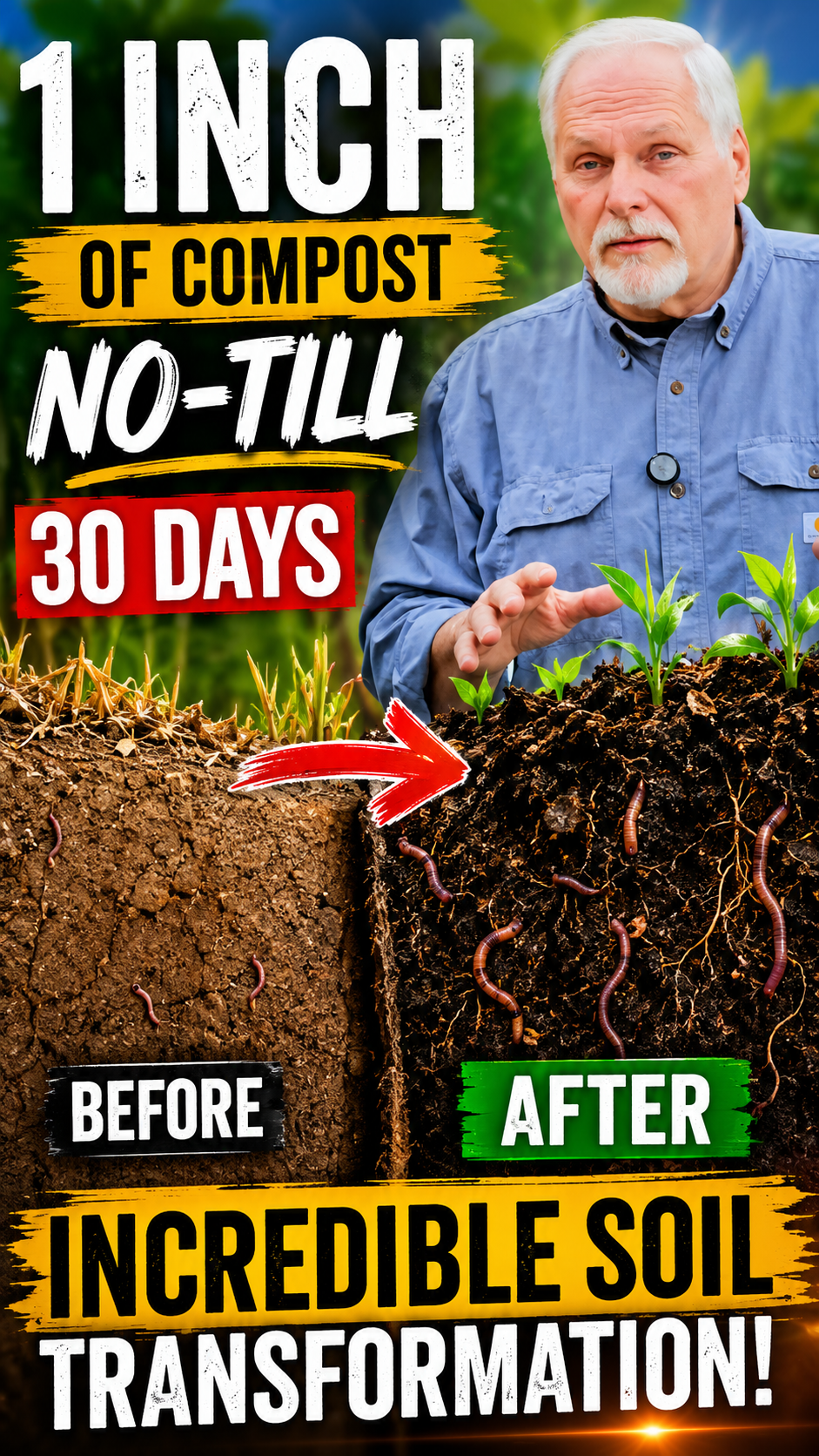
A yearly application of compost improves:
- Soil structure
- Microbial activity
- Water retention
- Nutrient availability
Think of compost as food for your soil ecosystem. Fertilizer feeds your plants – compost feeds your soil. And remember, your organic soil requires organic fertilizer such as the Dr. Earth and Espoma products.
- Planting Too Closely Together
It’s tempting to maximize production by squeezing more plants into a raised bed.
However, overcrowding often leads to:
- Reduced airflow
- Increased disease pressure
- Nutrient competition
- Smaller harvests
The Solution
Follow the recommended plant spacing guidelines specific to the variety of crop your introducing to the bed.
Proper spacing helps:
- Improve air circulation
- Reduce fungal diseases
- Increase sunlight exposure
- Produce healthier plants and larger yields
Remember: a slightly less crowded garden often produces more food. This guideline does not similarly apply to companion plants which gardeners often use in their vegetable gardens. Plants like basil or marigolds are used and recommended as companion plants for crops like tomatoes.
- Neglecting Mulch
Many gardeners focus on soil but overlook the importance of mulch.
Bare soil loses moisture quickly and becomes more susceptible to weed growth. It also heats up more in the midst of the hot summer growing season.
The Solution
Apply organic mulch around vegetables and flowers.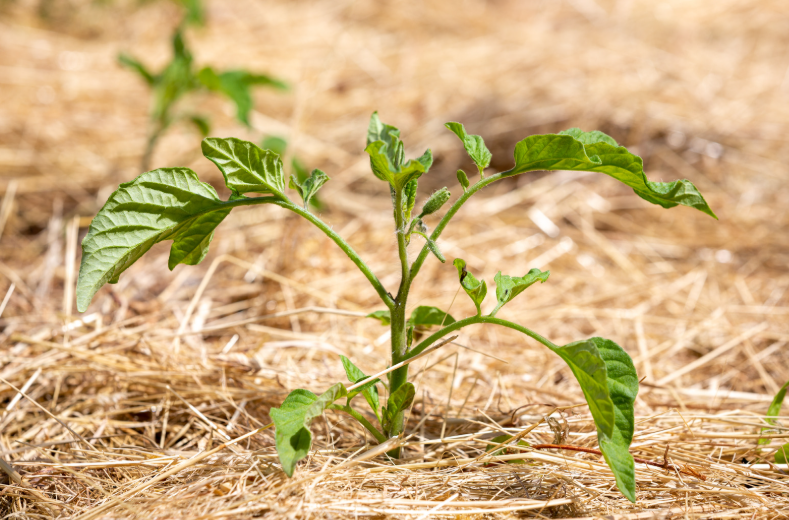
Popular options include:
- Clean Straw (NOT hay that contains weed seeds)
- Shredded hardwood mulch (like cypress or cedar)
- Cedar chips
- Pine straw / needles
- Leaf compost
Mulch helps:
- Retain moisture
- Moderate soil temperatures – especially the clean straw as it will help lowerl soil temperature since it reflects sunlight better than dark wood mulch
- Reduce weeds
- Improve soil as it breaks down
Caution: DO NOT use rubber mulch or colorant added mulch.
- Growing the Same Crops in the Same Spot Every Year
Crop rotation isn’t just for large farms.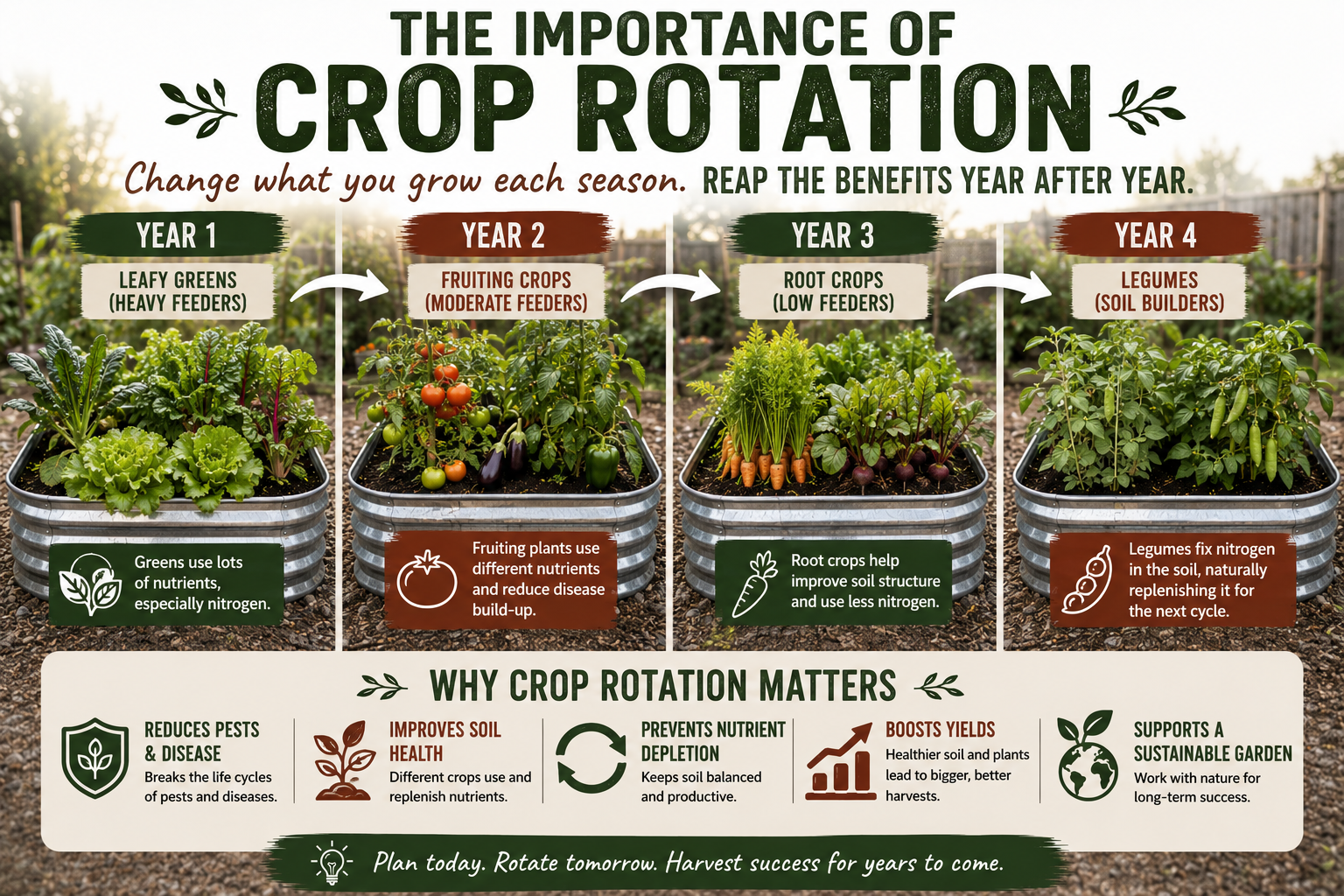
Planting the same vegetables in the same location year after year can contribute to:
- Nutrient depletion
- Pest buildup
- Disease problems
- Poor crop production
The Solution
Rotate plant families whenever possible.
For example:
- Tomatoes, peppers, and eggplants should not occupy the same bed or at least the same area within the bed, every year.
- Follow heavy feeders with lighter-feeding crops such as: root vegetables (carrots, radishes, turnips), alliums (onions, garlic, leeks), and certain leafy greens (lettuce, spinach).
- Roate in crops like beans or legumes to help improve soil fertility since they are known as “nitrogen-fixers” – plants that help replenish soil nitrogen.
Even simple rotation practices can significantly improve long-term garden health.
- Forgetting That Healthy Plants Start with Healthy Soil
Many gardeners focus on fertilizers, pesticides, or gardening gadgets while overlooking the foundation of every successful garden: the soil.
The reality is simple. Good garden soil requires a quality planting media – which is topsoil. (aka. Black dirt – just be certain it has been screened,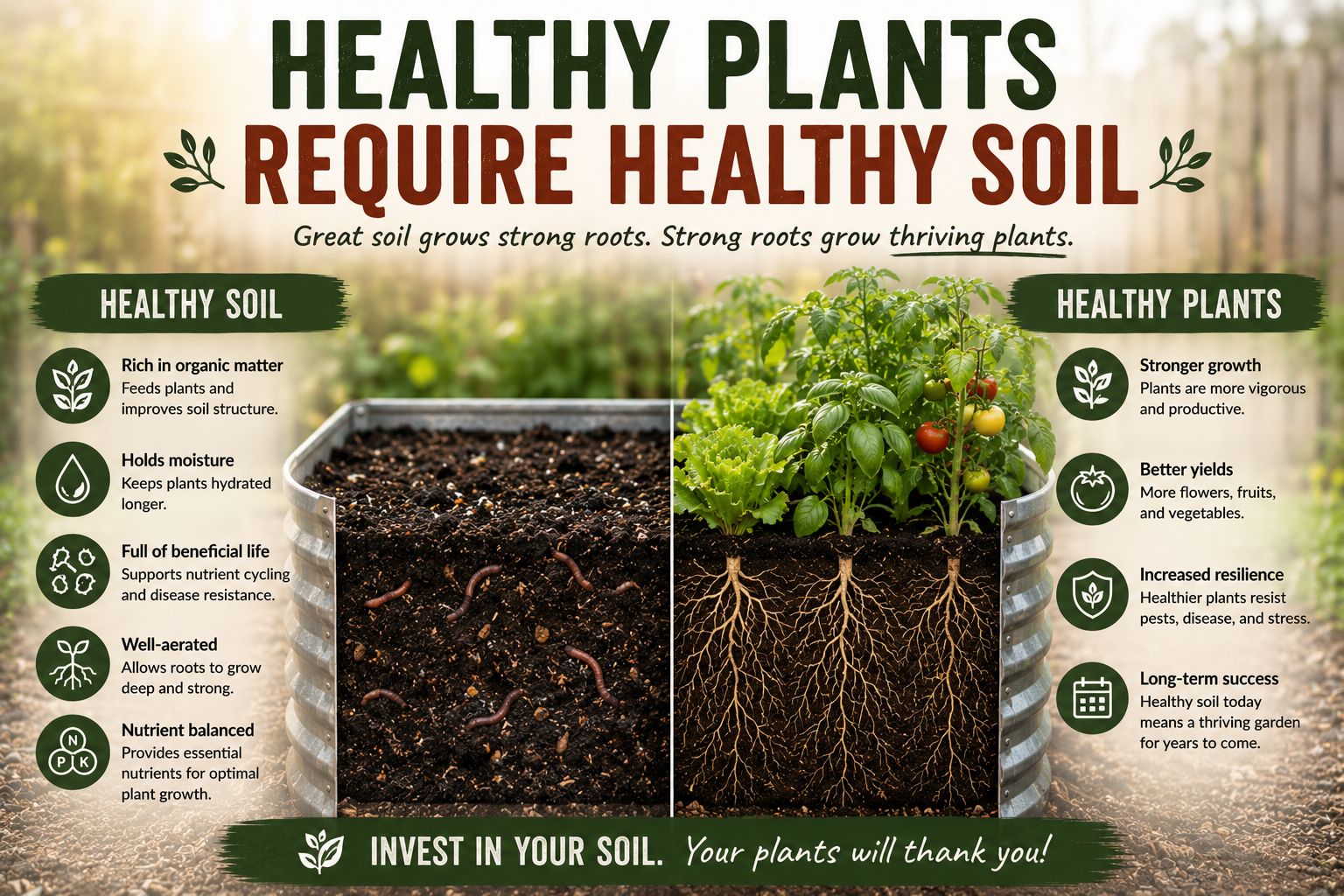 pulverized and kept dry)
Healthy soil creates:
- Strong roots
- Better nutrient uptake
- Improved drought tolerance
- Increased yields
- More resilient plants
The Solution
Invest in your soil first. It is the single most important component of your garden.
When you build a raised bed garden using quality soil, compost / organic matter supplemented with the proper type and amount of sand, you’re creating an environment where plants can naturally thrive with fewer problems throughout the season.
The Bottom Line
Raised bed gardening is one of the easiest and most productive ways to grow vegetables, herbs, and flowers at home. But even the best-designed raised bed can struggle if common mistakes are ignored.
By choosing the right soil, maintaining healthy organic matter levels, watering properly, mulching consistently, and avoiding overcrowding, you’ll set your garden up for success from the start.
At Tim Wallace Soil Mix Supply, we believe every great garden begins with great soil. Whether you’re building your first raised bed or improving an existing garden, starting with a high-quality soil blend can make all the difference in the health, productivity, and enjoyment of your garden.
Your plants can only be as healthy as the soil they’re growing in—and that’s a mistake no gardener wants to make.